Your Group Chat Has a Mole: The Art of Surviving Friends Who Can't Keep a Plot Twist to Themselves

Photo: friends shocked looking at phone on couch watching TV, via c8.alamy.com
It starts innocently enough. You're three episodes behind on that show everyone's been buzzing about. You've got a cozy Friday night locked in — snacks acquired, blanket situated, remote within reach. You're ready. And then your phone lights up.
"Bro I can't believe they killed him off 😭"
And just like that, your entire evening is a crime scene.
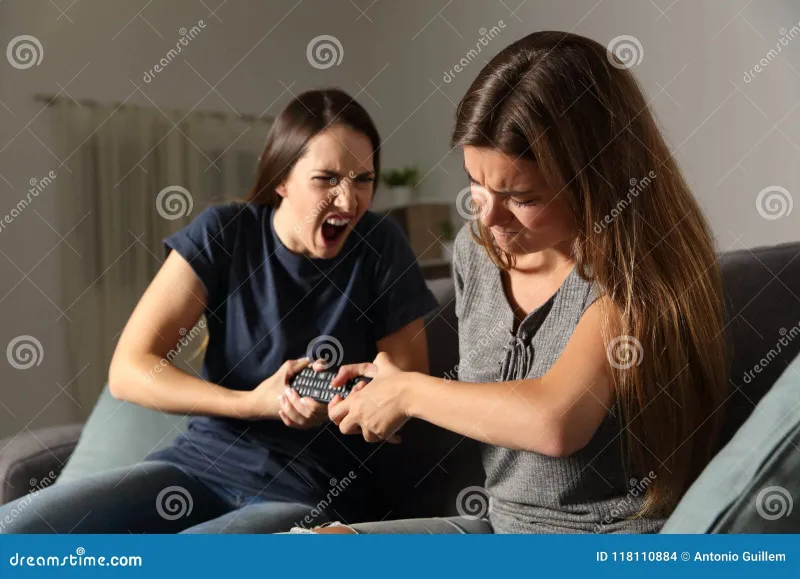
Welcome to the Spoiler Snitch Dilemma — the single greatest threat to watch party culture that nobody is talking about loudly enough. We've covered the remote wars. We've survived the bathroom break debates. But nothing — nothing — hits quite like having a plot twist detonated in your face before you've even pressed play.
The Anatomy of the Spoiler Snitch
First, let's establish something important: most spoiler snitches are not villains. They're not sitting in a dark room, cackling, plotting the exact moment to destroy your viewing experience. They're enthusiastic. They're excited. They just finished the episode, their brain is on fire, and they need to talk about it with someone — specifically, you.
The problem is that their excitement operates on a different time zone than your schedule.
There are a few distinct species here, and it helps to know which one you're dealing with:
The Immediate Reactor — Sends a message the literal second the credits roll. No thought. Pure feeling. "THAT ENDING THOUGH." Thanks, Marcus. Really helpful.
The Accidental Quoter — Doesn't technically name the twist, but quotes a line so specific that your brain fills in the rest. "I keep thinking about when she said 'I've known the whole time.'" You've said everything, Jessica. You've said everything.
The Check-In Culprit — Asks if you've watched yet, you say no, they say "okay no spoilers but..." and then proceed to describe the emotional arc of the finale in enough detail that you might as well have watched it.
The Intentional Detonator — Rare, but they exist. Usually a sibling. Usually smirking.
The Generational Fault Line
Here's where it gets genuinely interesting: the spoiler sensitivity gap between generations is real, and it's creating friction in group chats across America.
Millennials and Gen Z tend to treat spoilers like classified information — something to be guarded, handled carefully, released only when all parties have confirmed they've watched. There's a whole protocol. You check in first. You use the phrase "no spoilers" like a sacred password. You send the vague hype text: "okay I finished it. WE NEED TO TALK. No rush, watch when you can."
Older generations — we're talking Gen X, Boomers — often operate on a different philosophy entirely. They grew up in a world where if you didn't watch the finale of Dallas when it aired, you were going to hear about it at the water cooler Monday morning. Spoilers were just... conversation. Normal conversation. The idea that you'd tiptoe around a plot point for someone who "could have watched it by now" genuinely does not compute for a lot of people in that bracket.
This is not a judgment. It's just a cultural reality that's colliding hard in the era of binge-watching and asynchronous streaming. Not everyone watches on the same schedule. That's the whole point of on-demand content. And yet, our social habits haven't fully caught up.
The Psychology of Why They Do It
So why can't some people just... hold it together?
Turns out, there's actual psychology behind this. Sharing exciting information — especially emotional, surprising information — triggers a dopamine response. Your brain gets a little hit of reward for passing the exciting thing along. You feel connected. You feel like you're part of something. Keeping a secret, especially a juicy one, requires genuine cognitive effort. For some people, that effort is simply too much to ask when they're emotionally activated by what they just watched.
Also, let's be honest: for some folks, being the first to share news carries its own social currency. Being the person who tells you about the twist is almost as exciting as experiencing the twist yourself. It's not malicious. It's just very, very human.
Understanding this doesn't make it less annoying. But it does make it harder to fully hate your friend for doing it.
Spoiler-Free Zones: The New Social Contract
The modern solution that's quietly taking hold in group chats everywhere is the concept of the designated spoiler-free zone — usually a separate thread, channel, or even just a mutually agreed-upon rule that certain conversations don't happen until everyone's caught up.
Some crews have gotten creative about this:
- The Reaction Thread — A separate group chat specifically for episode reactions, that people join only after they've watched. If you're in the thread, you've consented to the chaos.
- The ETA Check — Before posting anything remotely spoiler-adjacent, one person asks the group: "Where's everyone at?" Simple. Effective. Wildly underused.
- The Spoiler Bracket — Borrowed from sports culture, this involves literally scheduling when the group plans to watch something, so everyone's on the same timeline. Sounds extreme. Works beautifully.
Social media adds another layer of complexity entirely. The moment something airs, Twitter (fine, X, whatever), TikTok, and Instagram become active minefields. Algorithms don't care about your viewing schedule. They will surface a reaction video with a thumbnail that shows the exact face of the character who just died, and they will do it within hours. The only real defense is to watch things quickly or go full digital hermit until you do — neither of which is always realistic.
What to Do When It Happens to You
Okay, real talk. You've been spoiled. The damage is done. What now?
First: take a breath. Research actually suggests that spoilers don't ruin the experience as completely as we think they will. Knowing a twist in advance can sometimes enhance your appreciation of how the story gets there — you start noticing the foreshadowing, the small moments that pay off later. It's not ideal, but it's not the apocalypse either.
Second: decide if this is a teachable moment or a let-it-go situation. If your friend genuinely didn't realize they'd done it, a calm "hey, heads up — I wasn't caught up yet" is usually enough. They'll feel bad. They'll be more careful next time. Friendship survives.
If it's the same person doing this repeatedly? That's a conversation. Or at minimum, a mute.
Third: lean into the watch party format as your shield. When you're watching with your crew in real time — same couch, same screen, same exact moment — the spoiler problem evaporates. Nobody's texting plot twists when you're all experiencing them together, live, simultaneously losing your minds over the same scene.
That's the beauty of the watch party. It's not just a viewing format. It's a spoiler-proof bunker.
The Bottom Line
The Spoiler Snitch isn't going anywhere. They live in your contacts, they're in your family group chat, they're possibly sitting next to you on the couch right now, fingers hovering over the keyboard, barely containing themselves.
But with a little communication, a few ground rules, and the occasional dedicated reaction thread, you can build a watch culture that keeps everyone's experience intact — and keeps the friendships, too.
Just maybe mute the group chat until you finish the episode. Trust us on this one.